Fyre Festival: The $26 Million Influencer Partnership Scam That Changed Marketing Forever
Fyre activated 400 influencers on the same day to manufacture social proof before any attendee could verify what they were actually purchasing.
The Orange Tile That Broke the Internet
In December 2016, 400 of Instagram's most-followed influencers posted the same thing simultaneously: a blurry orange square. No caption. No context. Just a cryptic image shared by accounts that collectively reached hundreds of millions of followers.
Within hours, it was the most talked-about post on the platform. Within weeks, thousands of people had paid between $500 and $12,000 to attend Fyre Festival — a luxury music festival on a private island in the Bahamas, promising headliners, supermodels, and an experience unlike anything on Earth.
What they got instead: soggy mattresses, cheese sandwiches, and a disaster that would result in two Netflix documentaries, multiple criminal convictions, and $26 million in fraud charges.
This is one of the most important partnership failure case studies of the modern era — not because the product was bad, but because the partnership strategy was deliberately weaponized to deceive.
The Partnership Anatomy of a Scam
Fyre Festival's marketing model was, on paper, impressive. Founder Billy McFarland and rapper Ja Rule built a promotional machine around influencer partnerships at a time when the FTC's disclosure requirements were barely enforced and audiences still trusted celebrity endorsements at face value.
The roster included Kendall Jenner, Bella Hadid, Emily Ratajkowski, and more than 400 other accounts. Kendall Jenner alone was reportedly paid $250,000 for a single post. The total influencer spend is estimated at over $5 million — a significant chunk of the $26 million raised from investors who were shown the same manufactured hype the public was.
But here is where the partnership model crossed from aggressive marketing into fraud:
- Influencers were not told the festival didn't exist in any operational form when they posted
- Many failed to disclose payments, violating FTC guidelines
- The promotional partnership was constructed to generate FOMO, not convey truth
- Investor presentations used fabricated metrics derived from the engineered social buzz
The partnership wasn't a growth strategy. It was the fraud mechanism itself.
What McFarland Actually Built
McFarland had already been running a scam card company called Magnises — a black card that promised exclusive access and delivered almost none of it. Fyre was Magnises at scale, and the influencer partnership model was the amplifier that made it work.
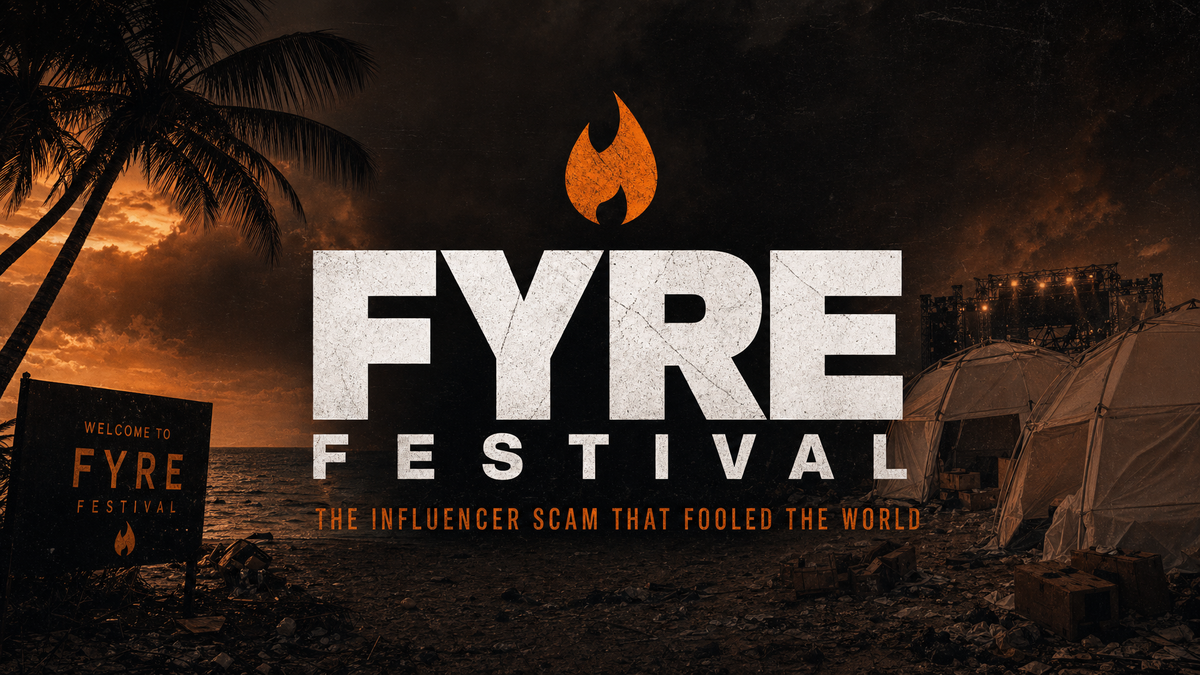
The festival site in Great Exuma, Bahamas, had no infrastructure, no permits, no artist contracts finalized, and no viable catering arrangements. The venue — a former drug lord's private island — had been promoted in the same influencer content as a paradise. In reality, the land wasn't even properly leased.
When attendees arrived in late April 2017, they found:
- Disaster relief tents instead of luxury eco-structures
- Luggage dumped in the rain on a gravel lot
- No working bathrooms, no security, no medical staff
- A catered meal that became the most mocked photo in food history: a plastic container with a slice of cheese, two pieces of bread, and some wet lettuce
The festival was canceled the day it was supposed to open. Thousands of people were stranded.
The Legal Fallout
McFarland pleaded guilty to two counts of wire fraud in 2018 and was sentenced to six years in federal prison. He was ordered to forfeit $26 million. He served approximately four years before release.
Ja Rule, who co-founded the event, was never criminally charged, though he faced multiple civil lawsuits. Many influencers who posted without disclosure also faced FTC scrutiny — a watershed moment that led to the much stricter disclosure standards enforced today.
Class action lawsuits against the organizers, promoters, and even some of the influencers dragged on for years.
What the Partnership World Should Have Seen Coming
In hindsight, the red flags were everywhere:
No proof of concept. The festival was announced and sold before a single operational element existed. Real partnerships are built on deliverable outcomes — not manufactured hype.
Paid promotion disguised as organic enthusiasm. Influencers were paid to act as if they'd discovered something amazing. The audience had no way to know the excitement was purchased.
No accountability structure. There was no oversight, no independent validation, and no checks on what was being promised versus what was being built.
Trust laundering through celebrity proxy. McFarland understood that audiences extend their trust in celebrities to whatever those celebrities touch. He didn't sell a festival. He sold borrowed credibility.
The Lesson for Founders
Fyre Festival didn't fail because influencer partnerships don't work. It failed — and became criminal — because the partnerships were structured around manufactured perception rather than real value.
The most dangerous scams in the partnership economy share one trait: they monetize trust before earning it. They use access to audiences as a shortcut past due diligence. They generate social proof before there's anything to prove.
The question every founder and every potential partner should ask before any deal is signed: if we strip out the hype, what is actually being delivered — and who verified it?
At onSpark, our entire matching infrastructure is built around trust signals, not social signals. Because the biggest partnerships in history have been destroyed not by bad products, but by the wrong people in the room.


